Turn the wheel
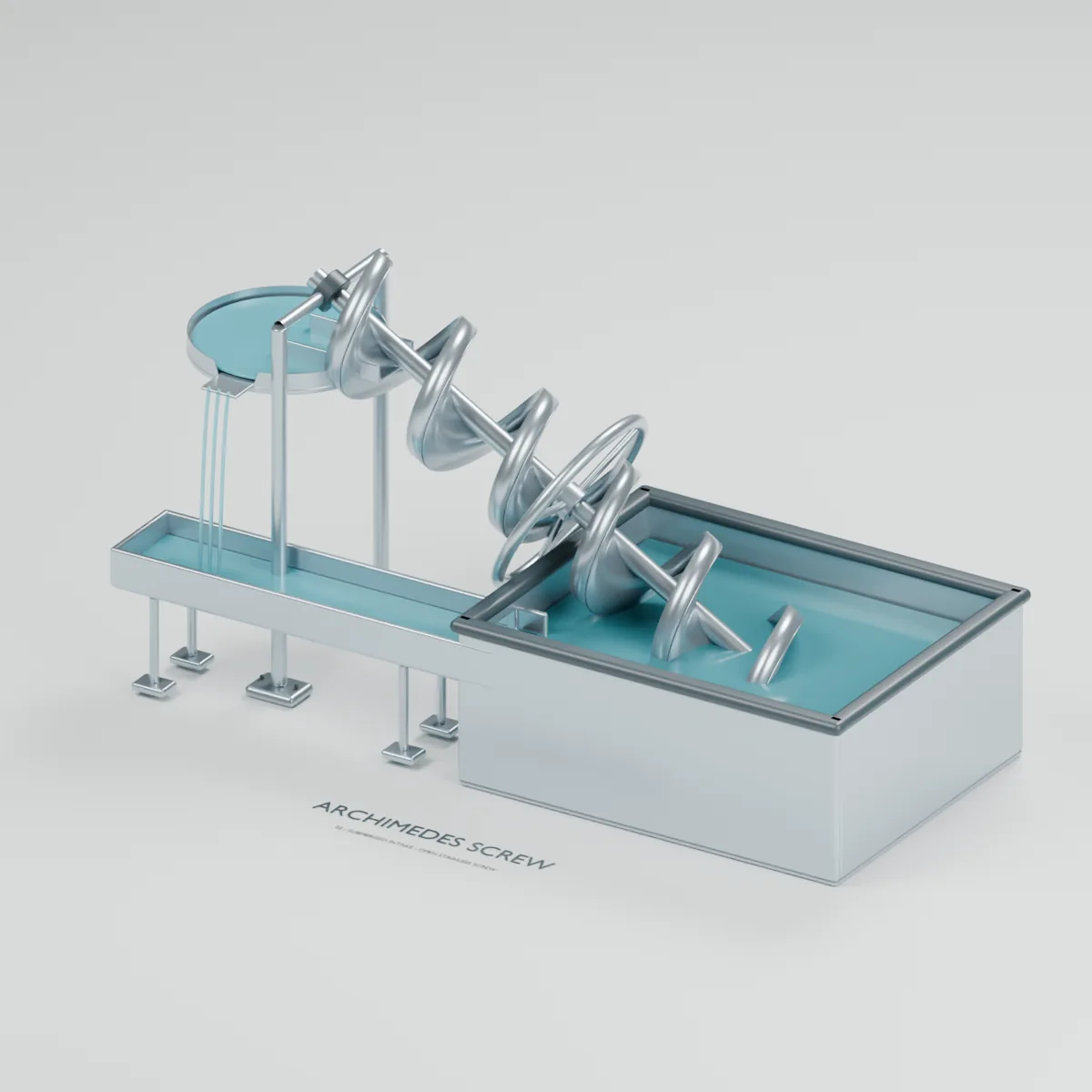
The handwheel rotates the inclined screw. Its lower flights dip into the intake pool to collect water.
MACHINES & MOTION
A simple turn. Water moves uphill.
Make an ancient engineering idea a hands-on discovery.
Load the 3D model to rotate and zoom. Approx. 1 MB.
Design concept shown in a fixed pose. The 3D view explores the form; water flow and the mechanism are illustrative.
FOLLOW THE WATER
The handwheel rotates the inclined screw. Its lower flights dip into the intake pool to collect water.
The raised edges of the rotating flights carry pockets of water toward the higher end of the screw.
Water arrives in the upper dish, spills into the flume and returns to the pool under gravity, ready for another turn.
A CLOSER LOOK
The open spiral, submerged intake and return channel are visible together in this concept view.
LEARNING THROUGH PLAY
Visitors connect the movement of their hands with the movement of water. They can make a prediction, try it and observe the result within the same interaction.
Explore how a rotating spiral can move water between two levels.
Feel the effort of turning a wheel and see that work lift water against gravity.
Try a slower or faster turn. Where does water enter? Where does it leave? What happens when you stop?
PART OF A BIGGER WATER TABLE
The screw can introduce a change in water level within a larger exhibit. Its receiving dish and return channel offer a clear route to follow and a starting point for conversations about lifting and flowing water.
During design, we review handwheel reach, the depth of the intake well, access around moving parts, splash control and the connection to the table’s water circuit. Dimensions and pumping performance are confirmed through engineering and prototyping.
See the complete water table exhibit →KEEP EXPLORING
Let’s explore how the Archimedes Screw could fit your water table.
Talk about your project